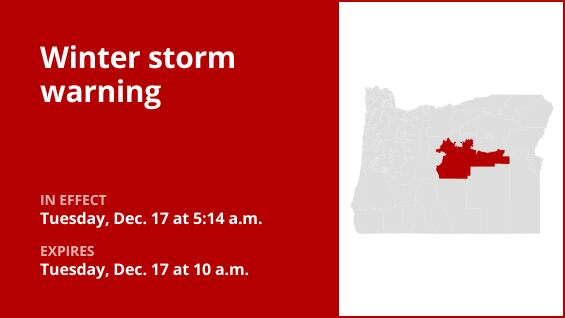
On Tuesday at 5:14 a.m. the National Weather Service issued an updated winter storm warning in effect until 10 a.m. for Ochoco-John Day Highlands.
The weather service adds, “Heavy wet snow Above 4000 Feet. Additional snow accumulations of 1 to 3 inches.”
“Even light snowfall amounts can accumulate on roads and cause dangerous driving conditions due to slippery and snow-covered roads,” adds the weather service. “Persons should consider delaying all travel. If travel is absolutely necessary, drive with extreme caution. Consider taking a winter storm kit along with you, including such items as tire chains, booster cables, flashlight, shovel, blankets and extra clothing. Also take water, a first aid kit, and anything else that would help you survive in case you become stranded. Do not touch downed lines and report any power outages to your electric company. Travel is highly discouraged due to slick roadways and the possibility of downed trees and power lines.”
Mastering winter roads: Guidance from the weather service for safe winter travel
Roads are frequently made dangerous by winter’s icy grip, which results in more than 480,000 injuries and over 6,000 weather-related vehicle fatalities annually. Safety should be your first concern when you’re on roads that are covered in snow or freezing rain. Go more slowly and be careful. It’s wise to anticipate icy patches on the road and modify your driving in response when the temperature is close to freezing. Keep an eye out for ice buildup on tree limbs and power lines, since they could shatter and fall. Steer clear of driving in these situations at all costs. However, if you must go outside, avoid touching downed power lines and take paths with fewer trees. If you come across one, call 911 right away. Here are some more driving guidelines for winter conditions:
Tell us about your travel itinerary:
Make sure to let relatives or friends know where you’re going, how you plan to get there, and when you expect to arrive when you’re leaving town in dangerous winter conditions.
Get your car ready:
Ensure your gas tank is full and equip your vehicle with essential winter supplies, including a windshield scraper, jumper cables, a small shovel, flashlight, cell phone, blanket, extra warm clothing, drinking water, and high-calorie non-perishable food.
Remain composed when stranded:
Remain calm if you end up trapped. Tell someone where you are and what’s going on. Avoid trying to get to safety by foot. To indicate that you need help, fasten a piece of fabric to the antenna or mirror of your vehicle. Use the dome light and flashers to increase the visibility of your car.
Be aware of snow plows:
Watch for snow plows and give them plenty of space to go by. You should only pass a plow when you can see the road well ahead.
Examine the state of the roads:
To make wise travel choices, check the state of the roads before setting out on your trip.
The weather service’s winter driving advice is essential for a safer trip on snow-covered roads. You may greatly lower your chance of accidents and protect your health during the harsh winter months by adhering to these rules.
Note: Every piece of content is rigorously reviewed by our team of experienced writers and editors to ensure its accuracy. Our writers use credible sources and adhere to strict fact-checking protocols to verify all claims and data before publication. If an error is identified, we promptly correct it and strive for transparency in all updates, feel free to reach out to us via email. We appreciate your trust and support!